Product Description
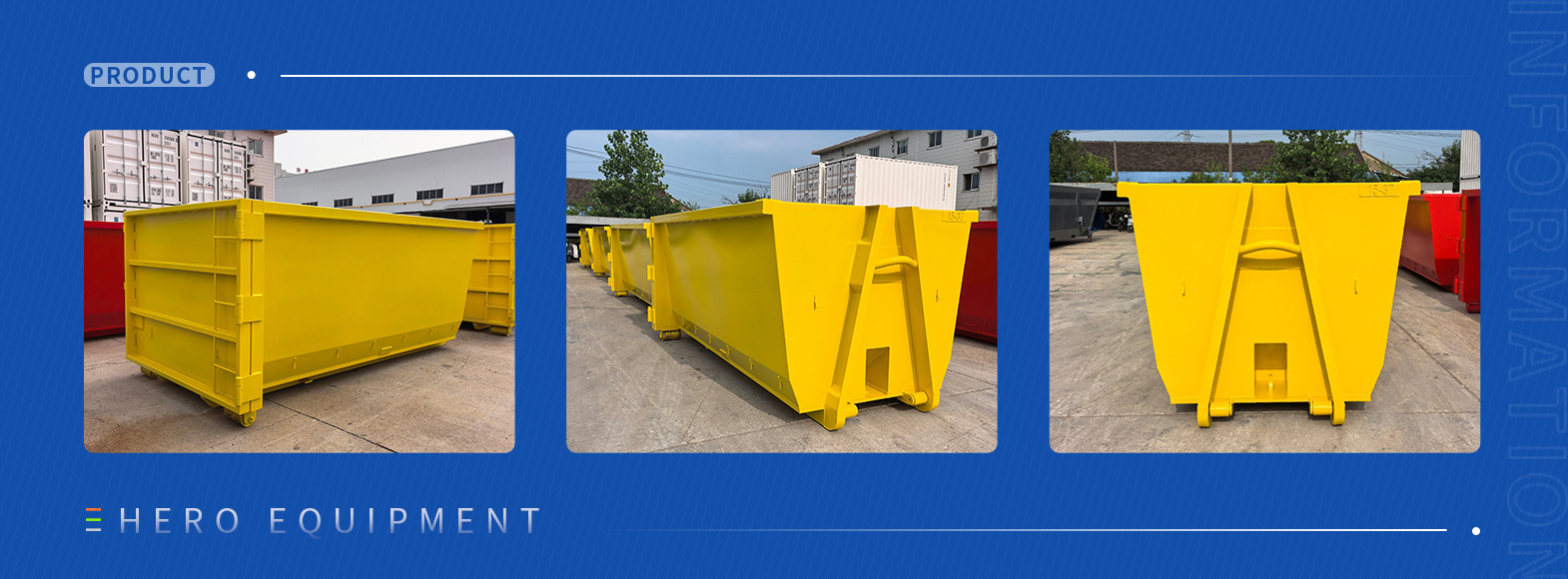
A Hook Lift Container is a heavy-duty, mobile container designed to work with the hydraulic hook-lift system of hook lift trucks. It enables fast loading, unloading, transportation, and tipping operations, and is widely used in recycling, construction, and industrial bulk material handling. With full customization from 4 to 40 cubic meters, it offers robust structural strength, high compatibility, and is a key solution for improving material turnover efficiency.
The following sections provide a detailed overview of its definition and structure, customization options, application categories, operating standards, regulatory safety requirements, and maintenance guidelines.
I. Basic Definition and Core Structure
Definition
A rectangular or square heavy-duty container compatible with hydraulic hook-lift truck systems. It is designed for efficient loading, transport, and tipping of bulk materials such as recyclables, construction debris, and industrial waste. Dedicated containers help prevent cross-contamination and significantly improve transfer efficiency.
Core Structure
Main Body
Fabricated from high-strength structural steel (commonly Q235 or Q345). Sidewalls and floor plates typically use 8–12 gauge steel (2.3–3.5 mm).
The main frame is constructed with 6" × 2" × 3/16" structural steel tuBing, ensuring excellent load-bearing capacity and long-term durability.
Compatibility Components
Equipped with an A-frame hook bar and lifting points at the front, along with guide rollers and support legs at the bottom. These components ensure full compatibility with hook lift truck hydraulic systems for safe loading, unloading, and tipping operations.
Optional Configurations
Available in open-top, semi-enclosed, or fully enclosed designs. Optional features include removable lids, tarpaulin covers, side doors or rear doors, internal partitions, and color-coded markings to support waste segregation and material classification.
II. Custom Specifications and Capacity Options
Hook lift containers support full customization from 4 to 40 cubic meters to meet diverse operational needs. Common configurations and typical applications are shown below:
| Capacity (m³) | Typical Dimensions (L × W × H, mm) | Recommended Load | Typical Applications |
| 4–10 | 3000×2000×1500 to 4000×2300×1200 | 1–3 tons | Small renovations, community recycling, small business waste |
| 10–20 | 4000×2300×1500 to 6000×2300×1750 | 3–5 tons | Medium construction projects, factory daily waste, commercial recycling |
| 20–30 | 6000×2300×2000 to 7000×2500×2200 | 5–8 tons | Large demolition projects, industrial bulk waste, metal recycling |
| 30–40 | 7000×2500×2200 to 8000×2500×2500 | 8–12 tons | Infrastructure projects, long-distance transport, heavy industrial waste |
Customization Notes:
Dimensions, wall height, and door configurations can be adjusted based on material type. For high-density materials such as metals or concrete blocks, thicker steel plates and reinforced frames are recommended to prevent deformation and overloading.
III. Classification and Typical Applications
(1) Classification by Material Type
Suitable for paper, cardboard, PET/HDPE plastics, glass, and metal cans. Materials should be pre-cleaned to remove oil, food residue, or contaminants to maintain recyclability.
Construction waste containers: Designed for concrete, bricks, and rebar; reinforced floors and leak-proof coatings help prevent spillage during transport.
Metal Scrap Containers: Suitable for steel, aluminum, and copper; reinforced sidewalls prevent deformation, and anti-slip floors improve loading and tipping efficiency.
Wood Waste Containers: For scrap wood and offcuts; open-top designs allow easy loading, with optional fire-retardant coatings.
Industrial Waste Containers: For plastic scraps, packaging waste, etc.; sealed designs can be customized to prevent odor dispersion.
Hazardous or special wastes such as wet paint, chemicals, asbestos, batteries, and medical waste must be handled separately in accordance with regulations and must never be mixed into standard hook lift containers.
(2) Typical Application Scenarios
Construction and Demolition
Separation and transport of concrete, steel, and wood to recycling plants, steel mills, or wood processors, significantly improving construction waste recycling rates.
Industrial and Manufacturing
Source-separated collection of production line waste to maintain material purity and reduce raw material costs.
Commercial and Retail
Bulk recycling of cardboard and plastic packaging from supermarkets and retail facilities, reducing collection frequency and supporting ESG compliance.
Community and Municipal Use
Waste segregation for large events or urban renewal projects, with centralized transport to sorting facilities to lower municipal recycling costs.
IV. Efficient Operation and Pre-Treatment Guidelines
Pre-Treatment Requirements
Cleaning: Empty and clean plastic bottles, cans, and glass containers; remove tape and oil stains from cardboard; compact metal cans to reduce volume.
Sorting: Follow local recycling guidelines strictly; mixed non-recyclable materials may cause the entire load to be downgraded or rejected.
Loading Order: Place lighter materials (cardboard, plastics) on top and heavier materials (metal, glass) at the bottom. Distribute weight evenly to prevent tipping and improve load efficiency.
Operating Procedure
Before Loading: Inspect hook points, guide rollers, and support legs. Ensure proper alignment with the hook lift truck and place the container on a flat, hardened surface away from building exits and fire lanes.
During Loading/Unloading: The truck operator controls the hydraulic hook system from the cab to lift and position the container smoothly, avoiding forced hooking that could damage the structure.
During Transport: Secure the container firmly to the truck, prevent load shifting, and comply with road weight limits to avoid fines and safety risks.
V. Safety Operating Standards
Overload Prevention: Always comply with the container’s rated load capacity. For high-density materials, select smaller containers or transport in multiple batches.
Safe Placement: Place containers on level, hardened ground, away from overhead power lines and high-traffic areas. Install warning markings and prohibit climBing.
Leakage and Fire Prevention: Seal containers carrying organic waste or liquid residues and keep them away from ignition sources to prevent fire hazards.
VI. Maintenance and Service Guidelines
Routine Inspection: Regularly inspect welds, sidewalls, hook points, and guide rollers. Repair any deformation, cracks, or excessive wear promptly to prevent safety incidents.
Corrosion Protection: Apply anti-corrosion coatings annually, paying special attention to floors, edges, and high-wear areas to extend service life.
Cleaning and Upkeep: Remove residual materials after each use to prevent corrosion and maintain cleanliness for efficient reuse.
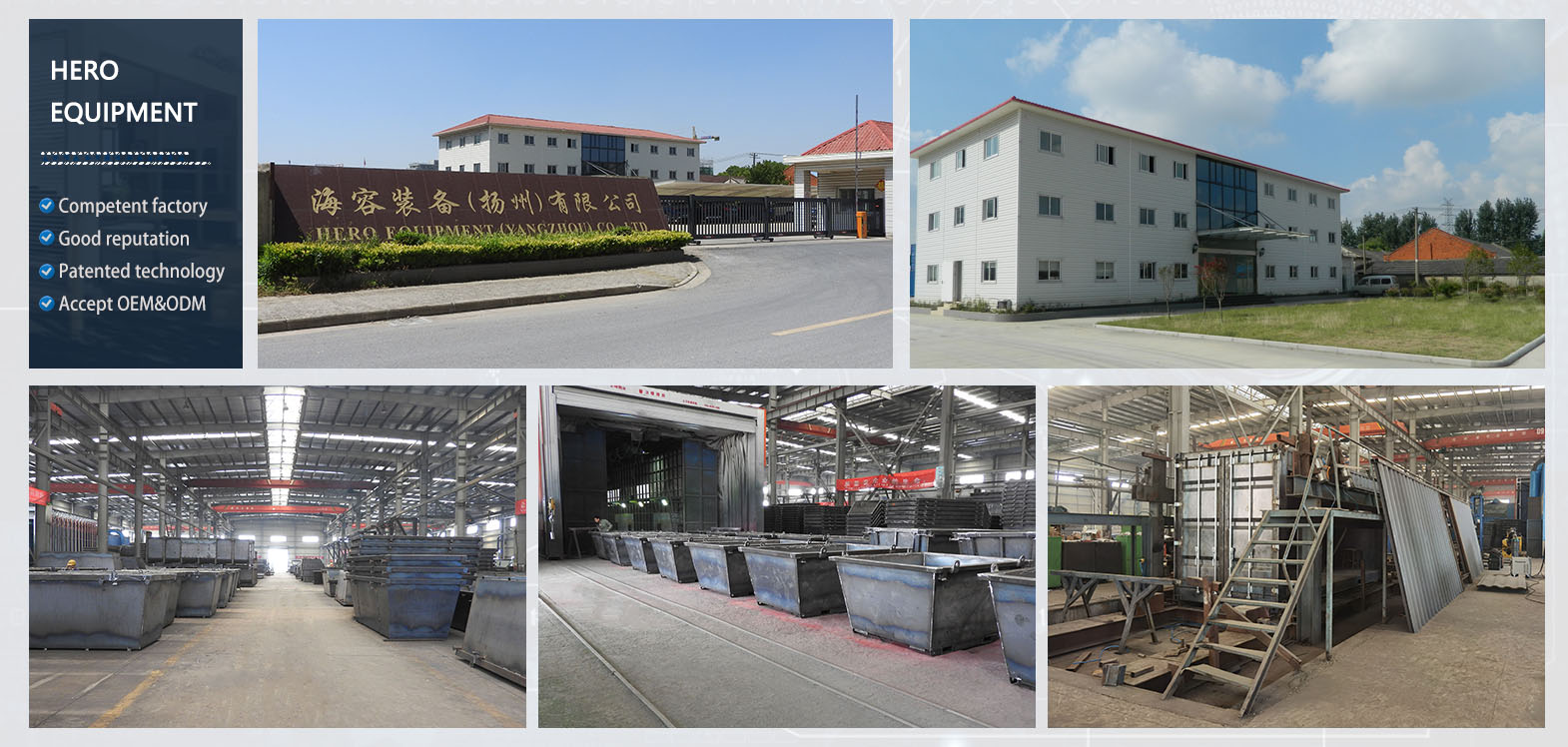
Our Factory
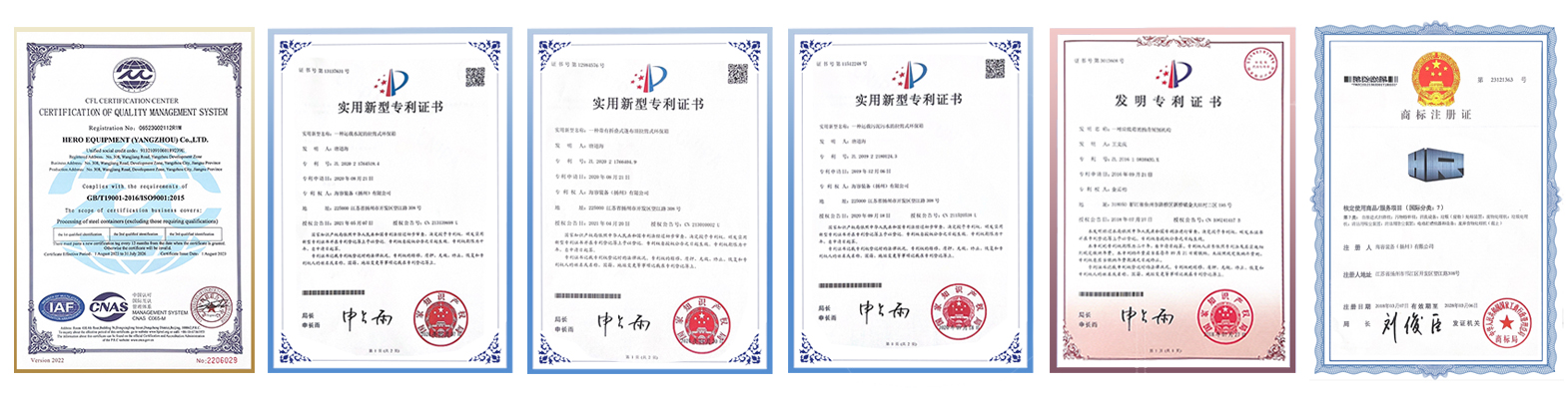
Our Cerfication
For more information : sale@heroeq.com
FAQ
1、Q: Are you a factory or trading company?
A: We are a factory with exporting license.
2、Q: Where is your factory located? How can I visit it?
A: Our factory is located in Yangzhou City, Jangsu Province, China, which is about 350 kms far from Shanghai. You can take the high-speed rail from Shanghai to Yangzhou, we can pick you up there. And there are other ways to come to our company, we can talk more talk if you can contact us. In one word, we can do more to make it easier to visit us.
3、Q: What does your factory do regarding quality control?
A: 1) All raw material we used are environmental-friendly;
2) Skilled workers are used in crucial production process
3) Quality Control Department will check all process like raw material, cutting sizes, parts welding, fully welding and the finished products to make sure they can meet the quality.
4、Q: What service can I get from Hero Equipment (Yangzhou ) Co.,Ltd ?
A: 1) Quick responses with full attention within 24 hours.
2) Customized Bins are accepted.
3) Updated production status
4) Short delivery time: some orders can be finished within 15 days, but usually within 30 days.
5) Service before and after sales.
5、Q: Can you design for us?
A: Yes, we can. We have our Tech Dpt.. We can customized design and produce the Bins as per customer's requirement.
6、Q: What is your terms of payment?
A: Usually we need 30% as deposit, and balanced will be paid after sending you the scanned copy of documents like B/L, Invoice packing list and so on.





 Telefon