Product Description
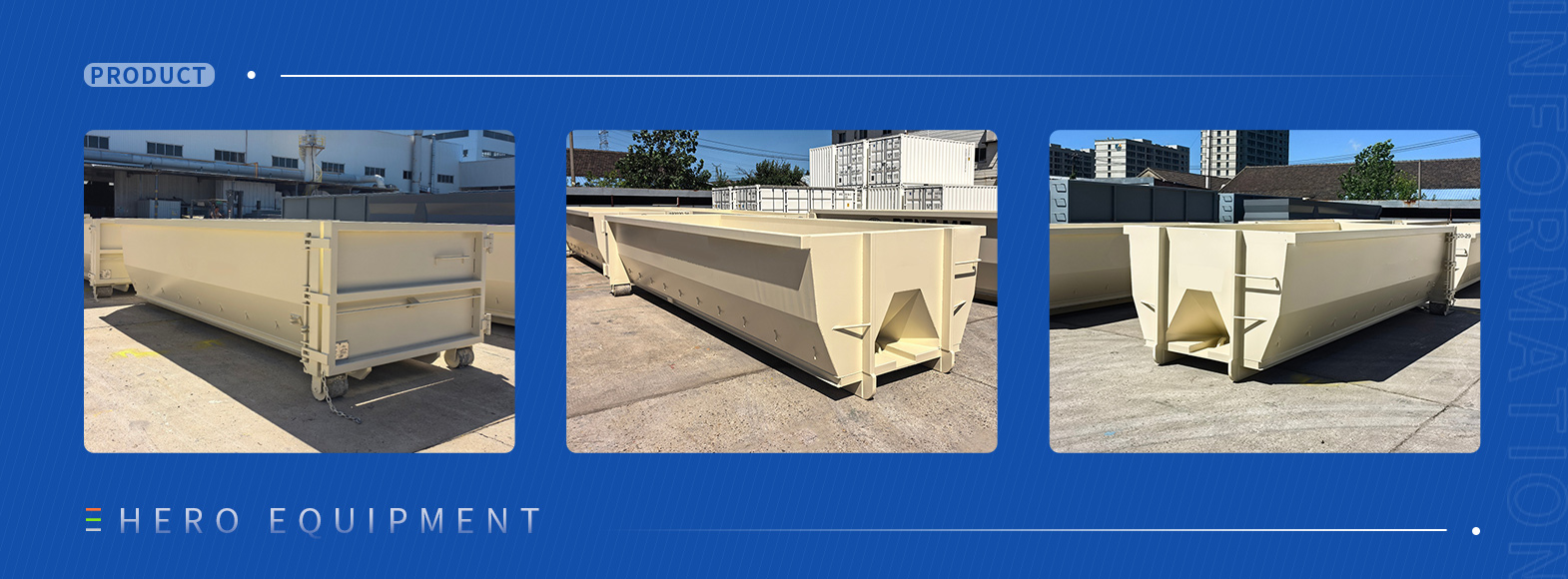
Waste Recycling Roll-Off dumpster is a large, open-top, mobile waste container designed for the temporary collection and recycling of large volumes of waste materials. It is transported using specialized roll-off trucks and is commonly used in construction sites, industrial facilities, and large community cleanup projects. This system significantly improves recycling efficiency and environmental performance. The following provides a detailed introduction covering basic concepts, specifications, application scenarios, operating procedures, environmental value, regulatory considerations, and best practices.
I. Basic Concept and Core Features
Definition
Also known as a Roll-Off Container, it is a rectangular, open-top steel container equipped with wheels and loaded or unloaded using a truck’s hydraulic system. It is used for the temporary storage of recyclable materials and is transported to recycling facilities once full.
Core Features
Easy Mobility: Equipped with wheels and designed for fast loading and unloading by specialized trucks, making it ideal for short-term or temporary recycling needs.
Large Capacity: Available in sizes ranging from 10 to 40 cubic yards, allowing it to hold large volumes of waste and reduce transportation frequency.
High Durability: Typically constructed from heavy-duty steel, capable of withstanding heavy loads and harsh environments, suitable for construction debris and industrial waste.
Flexible Sorting: Containers can be designated for specific recyclable materials (such as metal, plastic, wood, or cardboard), reducing contamination risks.
II. Specifications and Application Scenarios
Common U.S. sizes are measured in cubic yards. Typical sizes and applications include:
| Size (Cubic Yards) | Typical Dimensions (L × W × H) | Weight Limit | Typical Applications |
| 10 | 12' × 8' × 4' | ~1–2 tons | Small home cleanouts, yard waste, minor renovation debris |
| 15 | 16' × 8' × 4' | ~1 ton | Medium renovations, office remodeling, small industrial waste |
| 20 | 22' × 8' × 4' | ~2 tons | Large home renovations, roof replacement, mid-size construction projects |
| 30 | 22' × 8' × 6' | ~3 tons | Large demolition projects, industrial waste, community cleanup events |
| 40 | 22' × 8' × 8' | ~4 tons | Large-scale industrial projects, construction debris, major recycling programs |
III. Types of Recyclable Materials
Common Recyclables
Paper: Cardboard boxes, newspapers, magazines, office paper; must be kept dry and free from grease.
Plastics: PET bottles, HDPE containers, plastic pallets; should be cleaned to remove residue.
Metals: Steel scrap, aluminum cans, copper wire; clean metals without paint or chemical coatings are preferred.
Glass: Glass bottles and containers; must be sorted and handled to avoid breakage hazards.
Wood: Untreated waste wood, pallets, wood chips; must not contain preservatives or chemicals.
Construction Debris: Concrete, bricks, asphalt; can be crushed and reused as recycled aggregate.
Prohibited Materials
Hazardous waste (such as batteries, chemicals, medical waste), oil-contaminated materials, polluted waste, and radioactive substances are strictly prohibited and must be handled according to specialized regulations.
IV. Operating Process
Rental and Delivery: Select the appropriate container size based on expected waste volume. The provider typically delivers the dumpster within 24 hours and places it on a flat surface suitable for truck operation.
Sorting and Loading: Load materials according to recycling categories, ensure no contamination, and avoid exceeding weight limits.
Hauling and Processing: Once full, the provider is contacted. The roll-off truck retrieves the container and transports it to a recycling facility for sorting and processing.
Reuse and Recycling: Dumpsters are reusable, and damaged containers can be recycled as steel, supporting a closed-loop environmental system.
V. Environmental Value and Economic Benefits
Environmental Value
Reduced Landfilling: Increases recycling rates and reduces landfill usage, minimizing land occupation and environmental pollution.
Lower Carbon Emissions: Fewer transportation trips reduce emissions, and recycled materials require less energy than virgin materials.
Resource Circularity: Promotes the reuse of metals, plastics, and wood, reducing reliance on natural resources.
Economic Benefits
Cost Reduction: Large capacity lowers transportation and labor costs; sorted recyclables can increase resale value for materials such as scrap metal and cardboard.
Regulatory Compliance: Helps meet local recycling regulations and avoids fines from improper waste handling.
Enhanced Corporate Image: Supports ESG goals and strengthens a company’s environmental reputation.
VI. Regulatory Considerations and Compliance Guidelines
Weight Limits: Each dumpster size has a maximum load limit. Overloading may cause safety issues and fines.
Hazardous Waste Control: Hazardous materials are strictly prohibited and must be managed separately according to local laws. Violations may result in severe penalties.
Recycling Requirements: Some jurisdictions require construction or industrial projects to achieve specific recycling rates (e.g., 75%). Recycling records and transport documentation should be retained for compliance.
Container Covering: In some areas, dumpsters must be covered to prevent rainwater contamination and odor dispersion, in accordance with EPA or local environmental regulations.
VII. Best Practice Recommendations
Accurate Size Selection: Choose the right dumpster size based on waste volume and site constraints to avoid inefficiency or shortages.
Source Separation: Plan recycling categories in advance, use color-coded or labeled containers, and train staff to reduce contamination.
Regular Maintenance: Keep dumpsters clean and repair damage promptly to extend service life and reduce steel waste.
Compliance Tracking: Record material types, weights, and processing details to support audits and regulatory reporting.
Partner with Qualified Providers: Work with licensed recycling service providers to ensure compliant waste handling and avoid “greenwashing” risks.
Conclusion
The Waste Recycling Roll-Off Dumpster is a highly efficient large-scale recycling solution. When comBined with proper sorting, compliant operations, and effective environmental management, it significantly improves recycling efficiency, reduces costs, and supports sustainable development. Whether for construction projects, industrial operations, or community cleanup initiatives, proper use of this system contributes meaningfully to environmental protection.
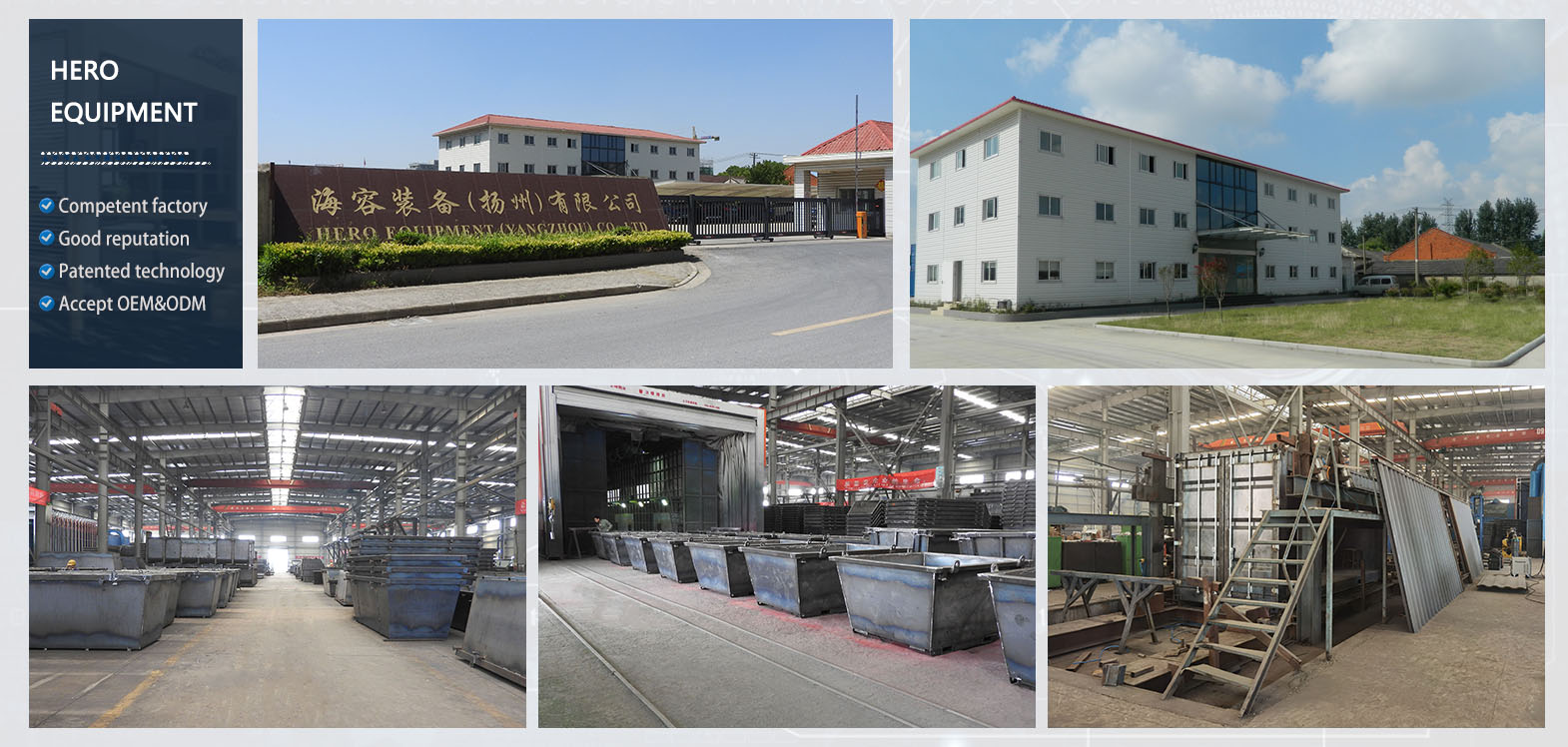
Our Factory
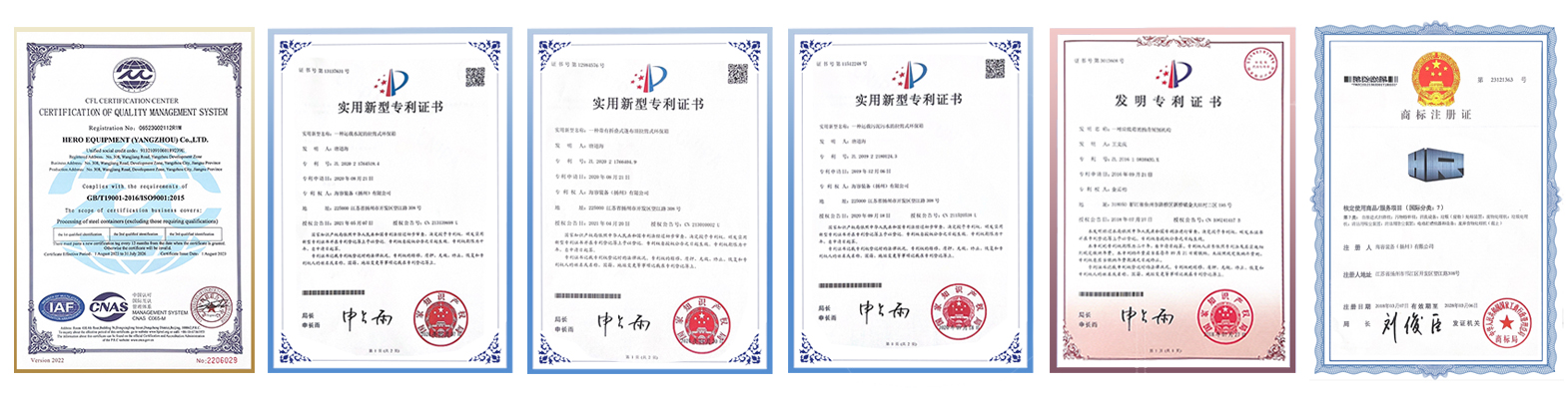
Our Cerfication
For more information : sale@heroeq.com
FAQ
1、Q: Are you a factory or trading company?
A: We are a factory with exporting license.
2、Q: Where is your factory located? How can I visit it?
A: Our factory is located in Yangzhou City, Jangsu Province, China, which is about 350 kms far from Shanghai. You can take the high-speed rail from Shanghai to Yangzhou, we can pick you up there. And there are other ways to come to our company, we can talk more talk if you can contact us. In one word, we can do more to make it easier to visit us.
3、Q: What does your factory do regarding quality control?
A: 1) All raw material we used are environmental-friendly;
2) Skilled workers are used in crucial production process
3) Quality Control Department will check all process like raw material, cutting sizes, parts welding, fully welding and the finished products to make sure they can meet the quality.
4、Q: What service can I get from Hero Equipment (Yangzhou ) Co.,Ltd ?
A: 1) Quick responses with full attention within 24 hours.
2) Customized Bins are accepted.
3) Updated production status
4) Short delivery time: some orders can be finished within 15 days, but usually within 30 days.
5) Service before and after sales.
5、Q: Can you design for us?
A: Yes, we can. We have our Tech Dpt.. We can customized design and produce the Bins as per customer's requirement.
6、Q: What is your terms of payment?
A: Usually we need 30% as deposit, and balanced will be paid after sending you the scanned copy of documents like B/L, Invoice packing list and so on.





 Telefon